Diena Georgetti: A.I and the Evolution of Self-Portraiture
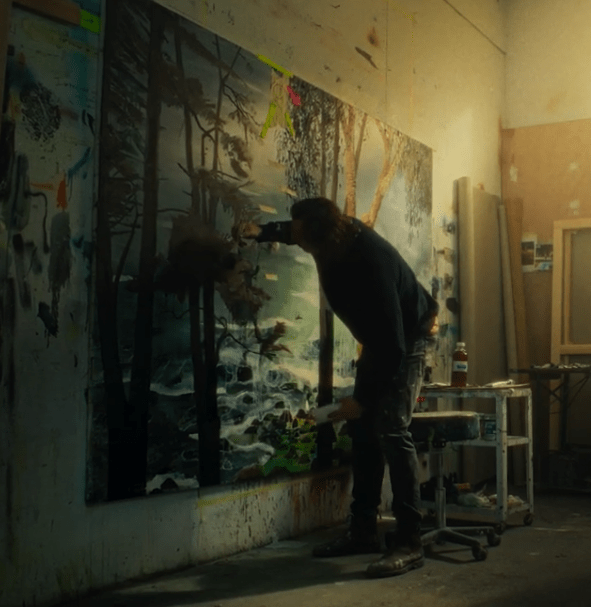
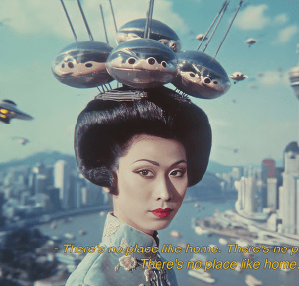
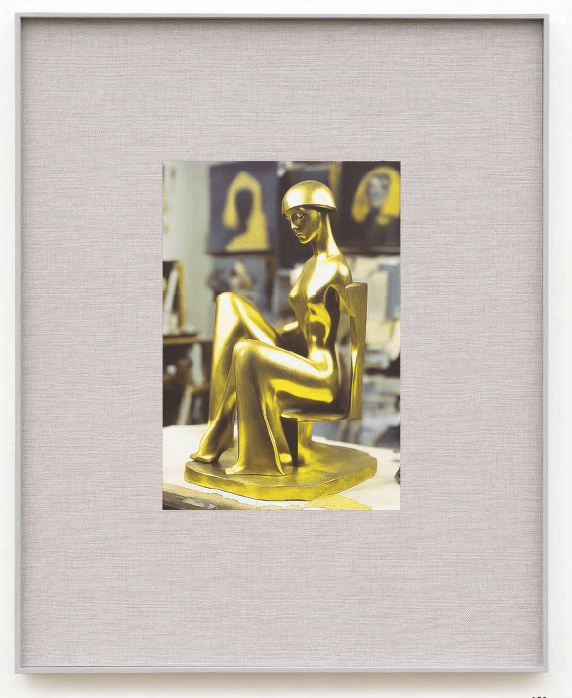
From text-based blackboard paintings to AI-assisted figurative works, Australian artist Diena Georgetti continues to push boundaries in her latest exhibition, TALISMANIC.
Words: Wes Hill
In the late 1980s, Diena Georgetti first gained attention in the Australian art world with poetically scrawled text-based blackboard paintings, inspired, in part, by Joseph Beuys and Cy Twombly. After moving from Brisbane to Melbourne in the early 1990s, where she was a member of Store 5 (1989-1993), an inspired artist-run-initiative, Georgetti’s blackboard pieces were included in the 1992 Biennale of Sydney, alongside the work of fellow up-and-coming ‘cultural itinerants’ such as Gordon Bennett and Hany Armanious. From here, her practice took a surprising turn. Shifting to a more disciplined, self-conscious demeanour, Georgetti began adapting historical painting styles, first with hints of orientalist allure then with an abstract, early twentieth century bent…
READ THE REST IN OUR LATEST ISSUE
READ MORE
 https://artcollector.net.au/wp-content/uploads/2026/07/Richard-Lewer-Portrait.jpg
1080
1920
Digital Editor
https://artcollector.net.au/wp-content/uploads/2021/11/Art-Collector-logos-transparency-WHITE-1080x1080px-2.png
Digital Editor2026-07-15 10:15:092026-07-15 10:15:09Breaking News: Richard Lewer
 https://artcollector.net.au/wp-content/uploads/2026/05/emma-buswell-portrait.jpg
853
1280
Digital Editor
https://artcollector.net.au/wp-content/uploads/2021/11/Art-Collector-logos-transparency-WHITE-1080x1080px-2.png
Digital Editor2026-05-13 15:23:262026-05-13 16:30:53Cool Hunter: Emma Buswell
 https://artcollector.net.au/wp-content/uploads/2026/04/Hughes_Sam-H_Headshot_2025_web-1.jpg
810
1080
Digital Editor
https://artcollector.net.au/wp-content/uploads/2021/11/Art-Collector-logos-transparency-WHITE-1080x1080px-2.png
Digital Editor2026-04-14 16:38:032026-05-13 16:45:22New Directions: Sara Hughes
 https://artcollector.net.au/wp-content/uploads/2026/04/Atong-Atem-251214_ARTCOLLECTOR_320.jpg
721
1080
Digital Editor
https://artcollector.net.au/wp-content/uploads/2021/11/Art-Collector-logos-transparency-WHITE-1080x1080px-2.png
Digital Editor2026-04-14 16:13:442026-05-13 16:34:45Curator’s Radar: Atong Atem
 https://artcollector.net.au/wp-content/uploads/2026/03/Screenshot-2026-03-11-at-4.13.09-pm.png
968
936
Robert Buratti
https://artcollector.net.au/wp-content/uploads/2021/11/Art-Collector-logos-transparency-WHITE-1080x1080px-2.png
Robert Buratti2026-03-11 19:15:282026-03-11 19:15:28Mike Parr: Look closely at what you’d rather not see
 https://artcollector.net.au/wp-content/uploads/2025/10/Philip-Wolfhagen.jpg
1920
1920
Digital Editor
https://artcollector.net.au/wp-content/uploads/2021/11/Art-Collector-logos-transparency-WHITE-1080x1080px-2.png
Digital Editor2025-10-15 09:45:072025-10-15 09:45:07Philip Wolfhagen: Fields of Vision