Notable Accolades: Wi Te Tau Pirika Taepa
We examine the work of artists who took out major prizes last year.
Words: Emil McAvoy
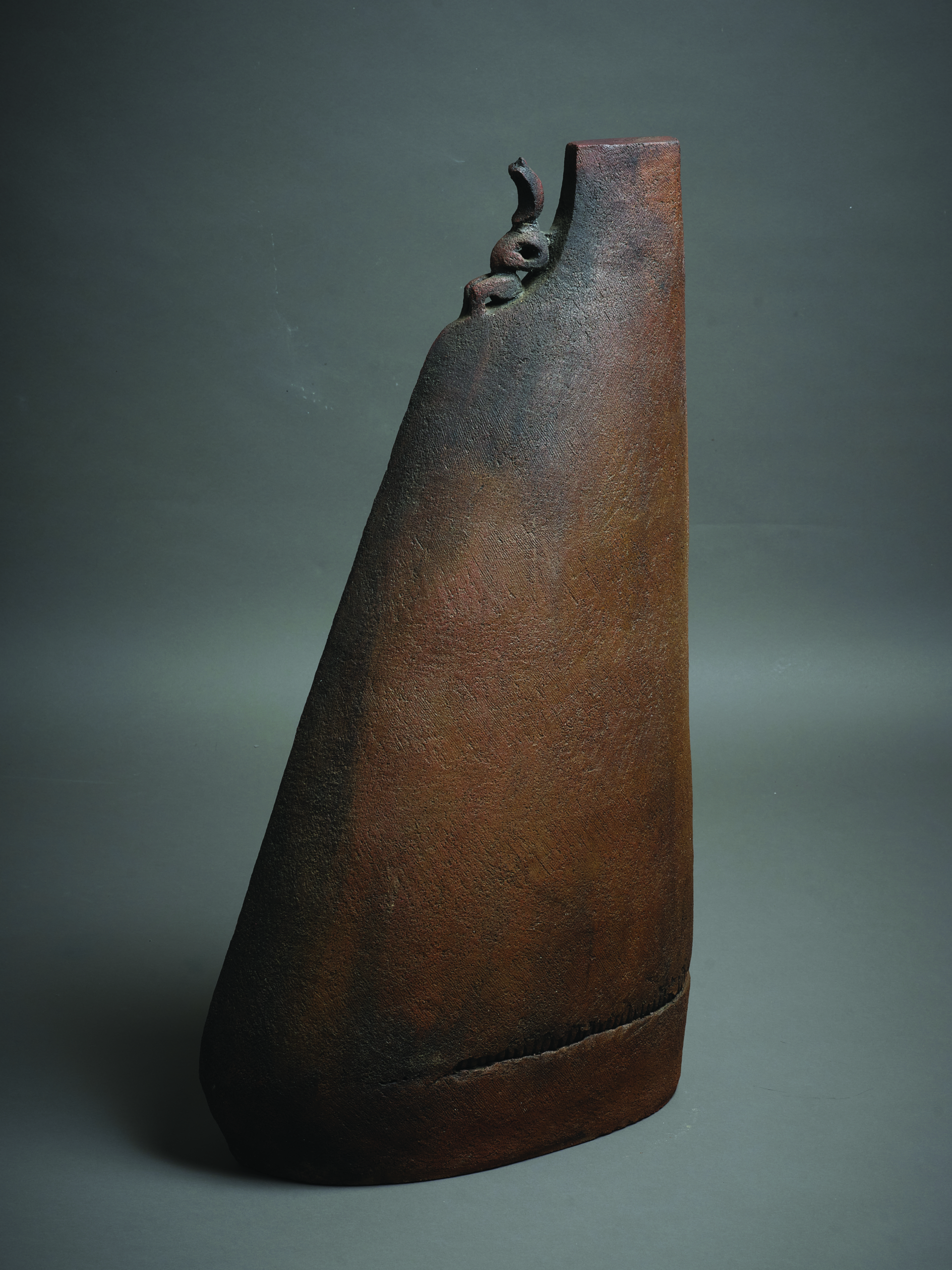
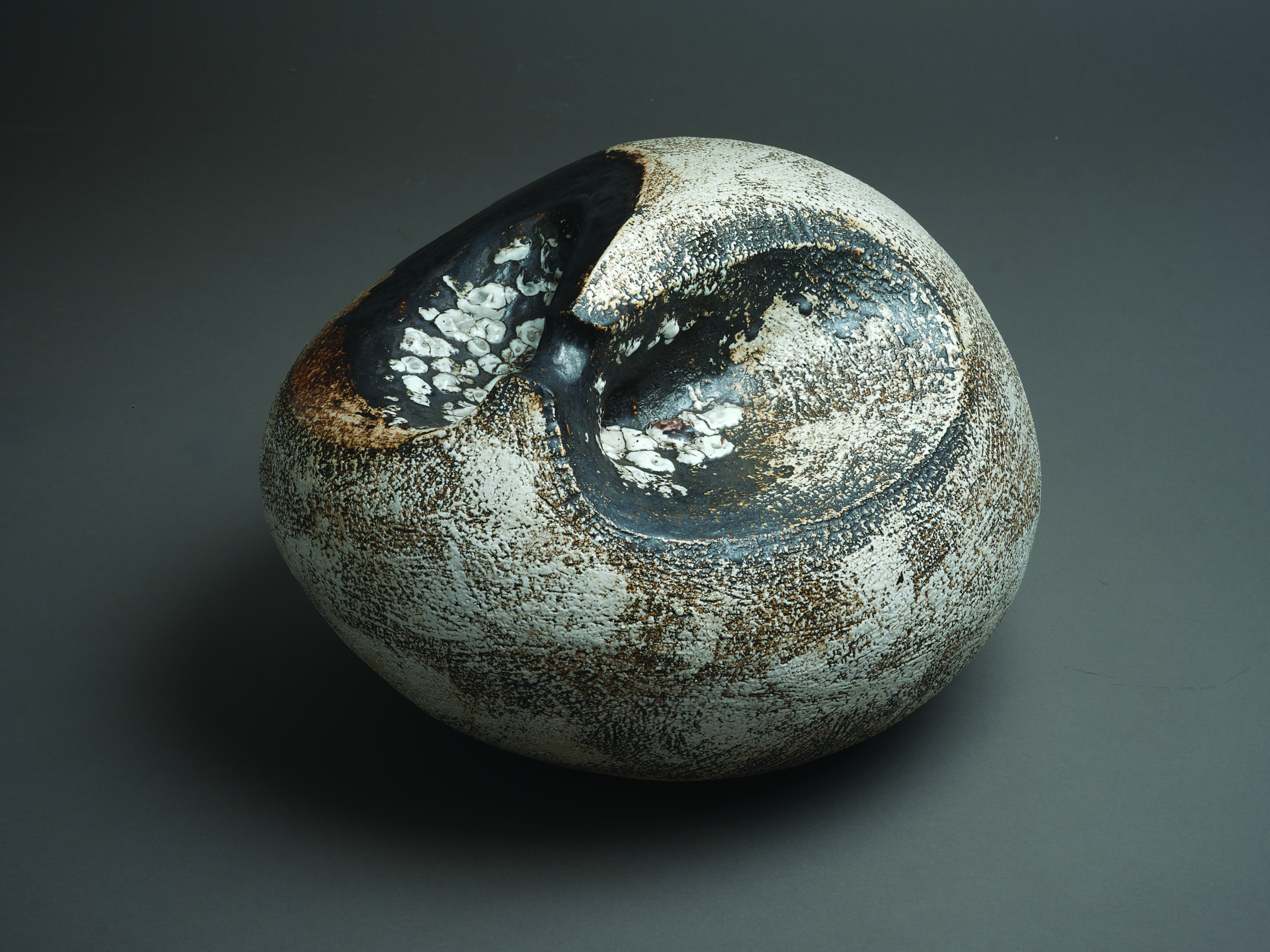
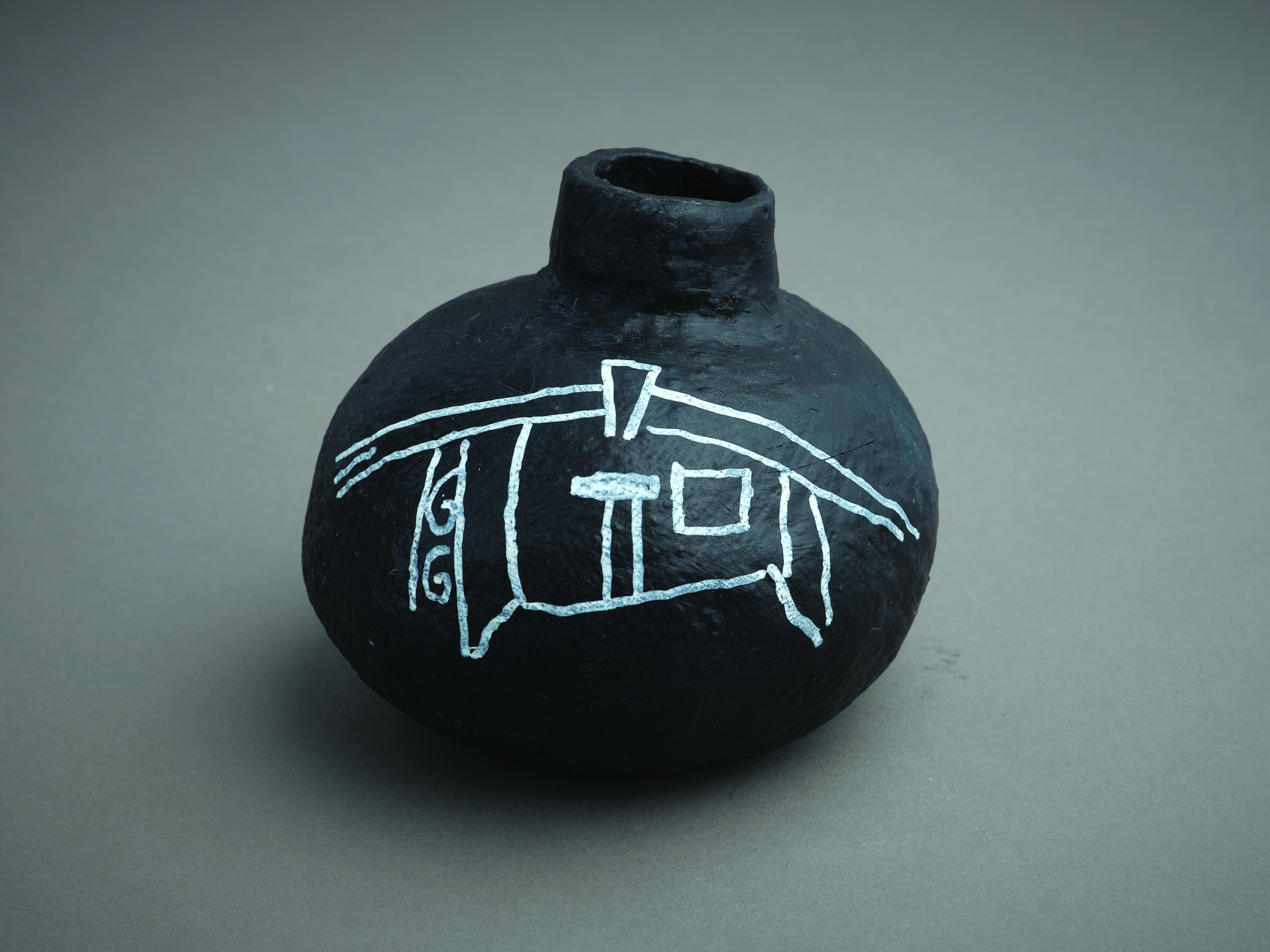
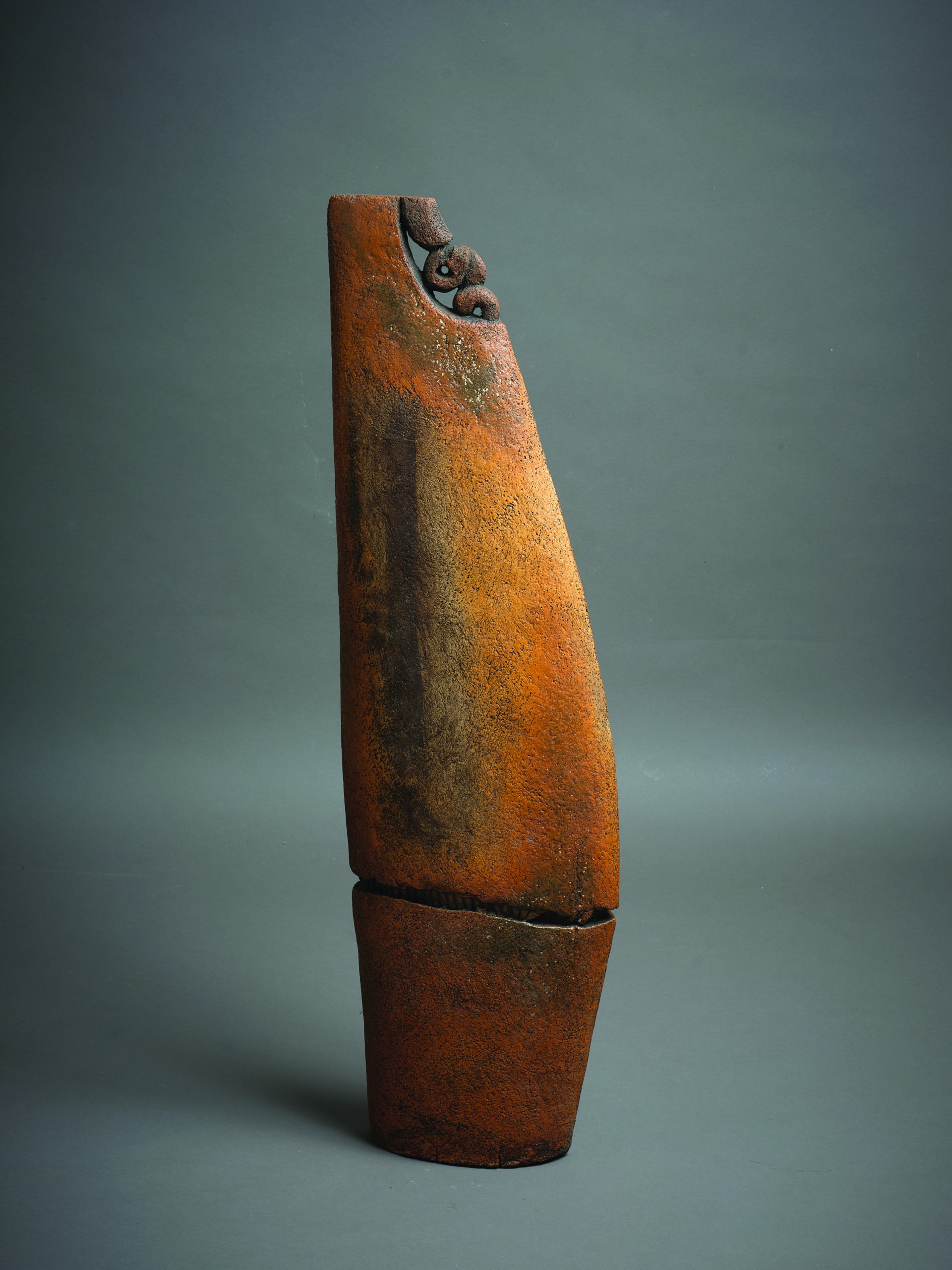
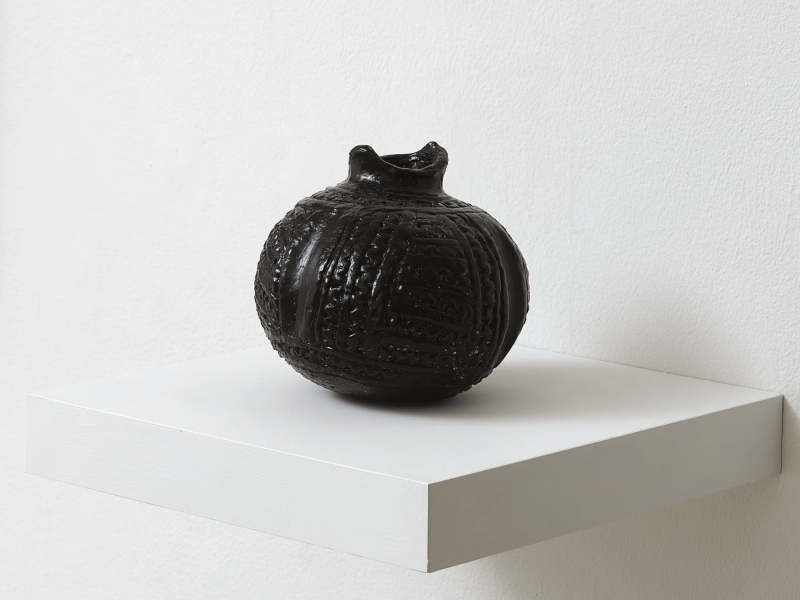
Wi Te Tau Pirika Taepa (Te-Roro-o-Te-Rangi, Te Arawa, Te Āti Awa) is a master of Māori art in clay with a career spanning more than 30 years. In 2022, Taepa was a recipient of the Platinum Jubilee Queen’s Birthday Honours and was appointed as an Officer of the New Zealand Order of Merit (ONZM) for his services to Māori art, particularly ceramics. Although clay is not considered a traditional Māori medium, the artist believes it is ideal for expressing Māori cultural values, and its use by Māori has a significant history.
Taepa was born in Te-Whanganui-a-Tara Wellington in 1946, and has been at the forefront of promoting uku (the medium of clay) within te ao Māori since the mid 1980s.
He comes from a line of Te Arawa master carvers, and with his uncle, Taunu Tai Taepa, carved the pulpit in Rangiatea Church, Otaki. He also carved a replica of St Faith’s Church in Rotorua, and many whare tupuna (ancestor’s house) around Aotearoa.
Taepa spent a number of years as a prison officer at Wi Tako (now Rimutaka) Prison and used art to open lines of communication with the prisoners. He taught Māori wood and bone carving, as well as work in leather and copper. Among his achievements over this time was participation in the carving of two pou (column) for the Michael Fowler Centre in Wellington, and helping to complete the Orongomai meeting house in Te Awa Kairangi ki Uta Upper Hutt.
When Taepa became a social worker at Kohitere Boys Farm in 1985, art was also an important part of his work in rehabilitation. Because wood was expensive and the carving tools potentially dangerous, he was obliged to look for alternatives. Taepa found clay to be the most suitable material, as it was inexpensive and readily available. His own works are predominantly hand-built using coil, slab or pinch pot techniques. They are unglazed and are sometimes fired in a hole filled with sawdust – which is lit and burns slowly overnight – or fired in gas or wood kilns.
Taepa holds a New Zealand Certificate of Craft Design from Whitireia Polytechnic (1998), a Bachelor of Fine Arts from Wanganui Polytechnic (1999), and a Master of Māori Visual Arts degree from Massey University (2017). He has exhibited widely, both nationally and internationally, including a solo exhibition at City Gallery Te Whare Toi Wellington in 2012, and a retrospective at Auckland Art Gallery Toi o Tāmaki in 2018.
His work is featured in the collections of the Museum of New Zealand Te Papa Tongarewa, Auckland Art Gallery Toi o Tāmaki and Te Manawa Museum. His work is also held in private collections in Aotearoa, United States, England, Europe, Africa and Samoa.
Taepa is represented by Sanderson Contemporary, Auckland, first exhibiting with the gallery in 2019 alongside artists Simon Kaan and Jon Tootill. In 2021, Taepa introduced a new suite of ceramics in Te Hā o te Marama, an exhibition presented in collaboration with Kaan. Lydia Cowpertwait, manager at Sanderson Contemporary, notes: “We are thrilled that Wi has been honoured with this award. Wi has been promoting uku, the medium of clay, within te ao Māori for many years. He is a wonderful mentor and story teller. It’s heart-warming to see his contributions to this art form and the arts community in Aotearoa being recognised.”
Featured image: Installation view of Maumahara at Sanderson Contemporary 2022 featuring Ipu Iwa, 2019 by Wi Te Tau Pirika Taepa. Courtesy: the artist and Sanderson Contemporary, Auckland.
This article was originally published in Art Collector issue 103, January-March 2023.
FOLLOW THIS ARTIST
READ MORE
 https://artcollector.net.au/wp-content/uploads/2024/07/05-Road-to-the-mountains-DSCF8901-Online-crop-1.jpg
1000
1000
Erin Irwin
https://artcollector.net.au/wp-content/uploads/2021/11/Art-Collector-logos-transparency-WHITE-1080x1080px-2.png
Erin Irwin2024-07-18 07:37:442024-07-18 07:38:03Artist Profile: Arryn Snowball
https://artcollector.net.au/wp-content/uploads/2024/07/05-Road-to-the-mountains-DSCF8901-Online-crop-1.jpg
1000
1000
Erin Irwin
https://artcollector.net.au/wp-content/uploads/2021/11/Art-Collector-logos-transparency-WHITE-1080x1080px-2.png
Erin Irwin2024-07-18 07:37:442024-07-18 07:38:03Artist Profile: Arryn Snowball https://artcollector.net.au/wp-content/uploads/2024/07/CHAPMAN-Doreen-scaled.jpg
2560
2560
Erin Irwin
https://artcollector.net.au/wp-content/uploads/2021/11/Art-Collector-logos-transparency-WHITE-1080x1080px-2.png
Erin Irwin2024-07-18 07:17:452024-07-18 07:17:45Artist Profile: Doreen Chapman
https://artcollector.net.au/wp-content/uploads/2024/07/CHAPMAN-Doreen-scaled.jpg
2560
2560
Erin Irwin
https://artcollector.net.au/wp-content/uploads/2021/11/Art-Collector-logos-transparency-WHITE-1080x1080px-2.png
Erin Irwin2024-07-18 07:17:452024-07-18 07:17:45Artist Profile: Doreen Chapman https://artcollector.net.au/wp-content/uploads/2024/07/JP1223_01-1.jpg
1000
1000
Erin Irwin
https://artcollector.net.au/wp-content/uploads/2021/11/Art-Collector-logos-transparency-WHITE-1080x1080px-2.png
Erin Irwin2024-07-17 08:28:552024-07-17 08:28:55Artist Profile: Jason Phu
https://artcollector.net.au/wp-content/uploads/2024/07/JP1223_01-1.jpg
1000
1000
Erin Irwin
https://artcollector.net.au/wp-content/uploads/2021/11/Art-Collector-logos-transparency-WHITE-1080x1080px-2.png
Erin Irwin2024-07-17 08:28:552024-07-17 08:28:55Artist Profile: Jason Phu https://artcollector.net.au/wp-content/uploads/2024/05/zo-658350e7-4f04-4cab-812e-a78f12de8efc-hires-image.jpg
1200
1200
Erin Irwin
https://artcollector.net.au/wp-content/uploads/2021/11/Art-Collector-logos-transparency-WHITE-1080x1080px-2.png
Erin Irwin2024-05-31 03:14:252024-05-31 03:14:25New Directions: David Noonan
https://artcollector.net.au/wp-content/uploads/2024/05/zo-658350e7-4f04-4cab-812e-a78f12de8efc-hires-image.jpg
1200
1200
Erin Irwin
https://artcollector.net.au/wp-content/uploads/2021/11/Art-Collector-logos-transparency-WHITE-1080x1080px-2.png
Erin Irwin2024-05-31 03:14:252024-05-31 03:14:25New Directions: David Noonan https://artcollector.net.au/wp-content/uploads/2024/05/ex.Shadow-Spirit_04.06.2023-Photo_James-Henry.jpg
1200
1200
Erin Irwin
https://artcollector.net.au/wp-content/uploads/2021/11/Art-Collector-logos-transparency-WHITE-1080x1080px-2.png
Erin Irwin2024-05-31 02:39:542024-05-31 03:16:47Curator’s Radar: Brian Robinson
https://artcollector.net.au/wp-content/uploads/2024/05/ex.Shadow-Spirit_04.06.2023-Photo_James-Henry.jpg
1200
1200
Erin Irwin
https://artcollector.net.au/wp-content/uploads/2021/11/Art-Collector-logos-transparency-WHITE-1080x1080px-2.png
Erin Irwin2024-05-31 02:39:542024-05-31 03:16:47Curator’s Radar: Brian Robinson https://artcollector.net.au/wp-content/uploads/2024/05/DSF5978lrg.jpg
830
830
Erin Irwin
https://artcollector.net.au/wp-content/uploads/2021/11/Art-Collector-logos-transparency-WHITE-1080x1080px-2.png
Erin Irwin2024-05-03 09:09:352024-05-03 09:09:35Debutantes: Robbie Fraser
https://artcollector.net.au/wp-content/uploads/2024/05/DSF5978lrg.jpg
830
830
Erin Irwin
https://artcollector.net.au/wp-content/uploads/2021/11/Art-Collector-logos-transparency-WHITE-1080x1080px-2.png
Erin Irwin2024-05-03 09:09:352024-05-03 09:09:35Debutantes: Robbie Fraser