Debutantes: Katie West
Refreshingly measured, sensitive and unafraid to engage with the complexity of ecological thinking, Katie West’s work unfolds across a time and space much larger than a single work or exhibition.
Words: Kate Britton
Since her meditative solo project, Decolonist, developed as part of Melbourne’s Next Wave Festival for emerging artists in 2016, Yindjibarndi woman Katie West has been drawing attention. The 2017 winner of the Dominik Mersch Gallery / Victorian College of the Arts Award for her graduate exhibition muhlu garrwarn / cool time hot time, West was awarded a solo show with Dominik Mersch Gallery in 2018 and is on the brink of a very busy year ahead.
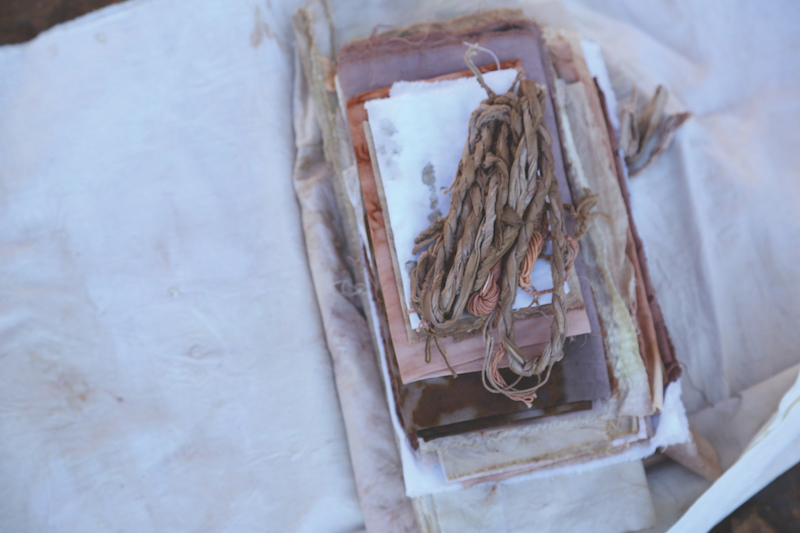
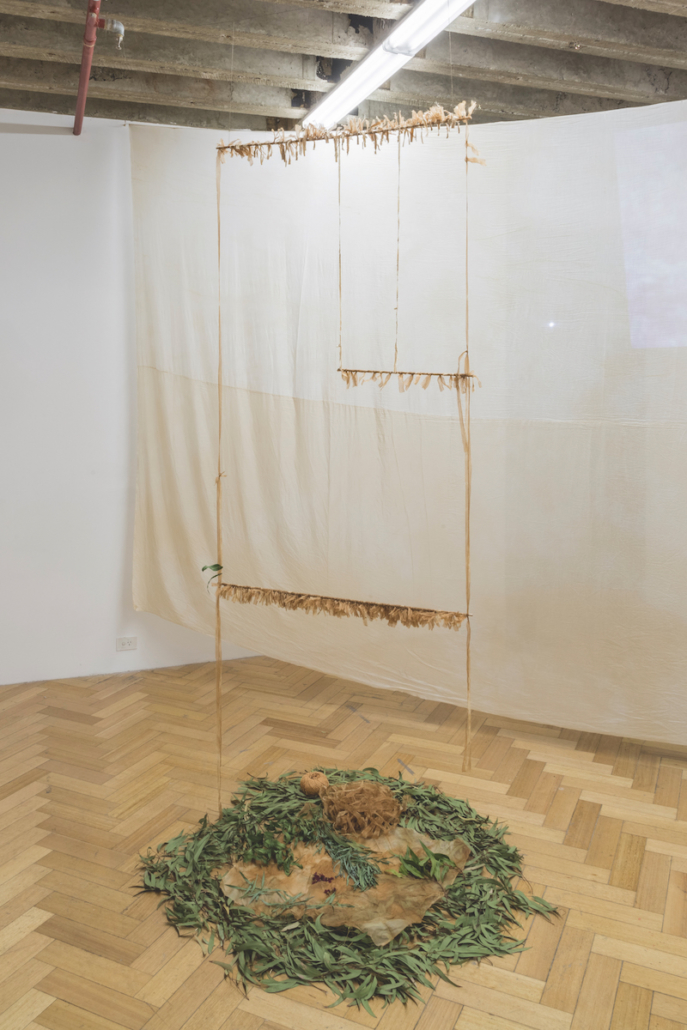
West’s practice encompasses installation and dyed textiles. Process and outcome form an inseparable connection to her ancestors and speak of a future that demands a renewed connection to our natural environment.
Her projects include natural dyeing using traditional methods and native plants; flowers and bark; instructional texts; and the construction of reading spaces devoted to exploring a First Nations understanding of our world. “I create spaces for meditation, contemplation and conversation,” says the artist of her practice.
Refreshingly measured, sensitive and unafraid to engage with the complexity of ecological thinking, West’s work unfolds across a time and space much larger than a single work or exhibition. Her intelli- gent approach has struck a chord across the country – 2019 will see West’s work exhibited at Bundoora Homestead in Victoria, TarraWarra Museum of Art as part of the CLIMARTE festival, and a second outing at Dominik Mersch Gallery, all by mid-Winter.
These projects will continue to explore the rift between Western and First Nations understandings of Country and our role within it.
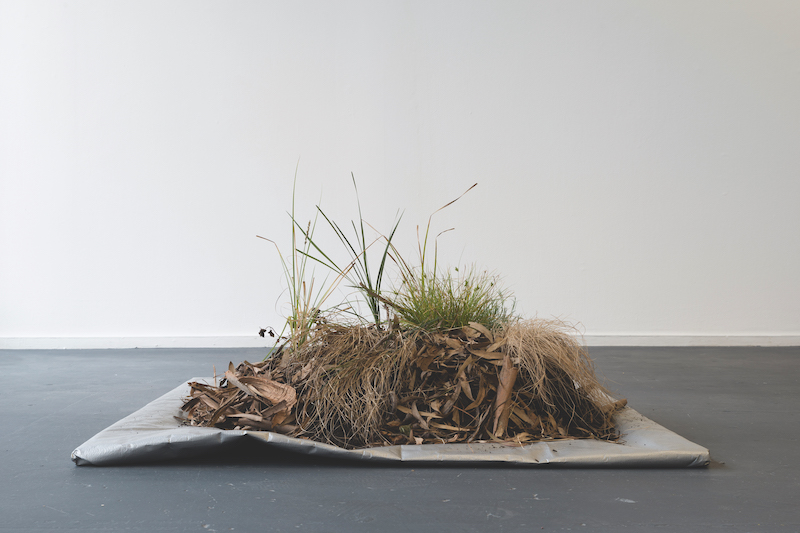
“I have been thinking about western units of measurement and how these conceptions of space work to make land a blank slate and commodity,” West says. Projects such as Mayuwarni and one square metre see the artist working with one-metre-squared pieces of yirrarla (calico) and tarp, “imbuing them with meanings that stem from a sense of custodianship and kinship with the land”.
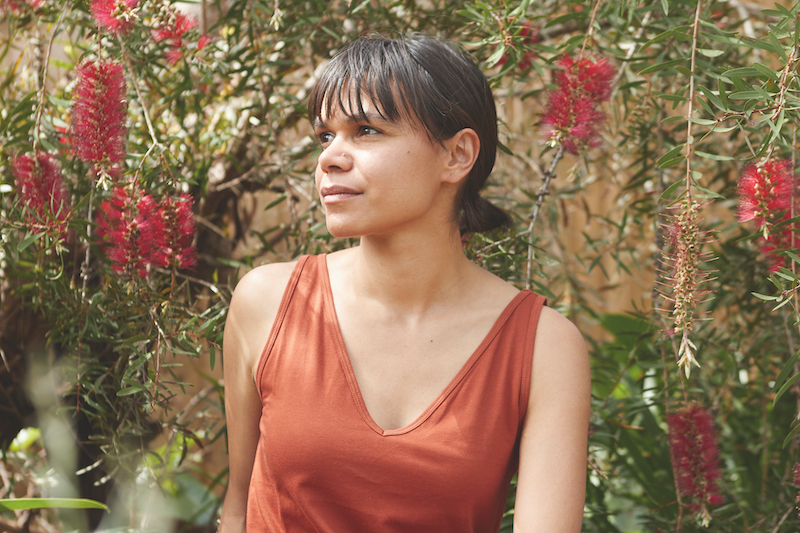
Featured image: Artist Katie West. Photography: Zan Wimberley
This article was originally published in Art Collector issue 87, JAN – MAR 2019.
FOLLOW THIS ARTIST
READ MORE
 https://artcollector.net.au/wp-content/uploads/2024/04/2.-AK22826-Install.jpg
1200
1200
Erin Irwin
https://artcollector.net.au/wp-content/uploads/2021/11/Art-Collector-logos-transparency-WHITE-1080x1080px-2.png
Erin Irwin2024-04-25 06:41:542024-04-25 06:41:54Collectors Love: Djakaŋu Yunupiŋu
https://artcollector.net.au/wp-content/uploads/2024/04/2.-AK22826-Install.jpg
1200
1200
Erin Irwin
https://artcollector.net.au/wp-content/uploads/2021/11/Art-Collector-logos-transparency-WHITE-1080x1080px-2.png
Erin Irwin2024-04-25 06:41:542024-04-25 06:41:54Collectors Love: Djakaŋu Yunupiŋu https://artcollector.net.au/wp-content/uploads/2023/04/Arena-2022-oil-acrylic-and-alkyd-on-canvas-153-x-183-1.jpg
1200
1200
Erin Irwin
https://artcollector.net.au/wp-content/uploads/2021/11/Art-Collector-logos-transparency-WHITE-1080x1080px-2.png
Erin Irwin2023-04-12 04:09:522023-04-12 04:09:52Debutantes: Joel Arthur
https://artcollector.net.au/wp-content/uploads/2023/04/Arena-2022-oil-acrylic-and-alkyd-on-canvas-153-x-183-1.jpg
1200
1200
Erin Irwin
https://artcollector.net.au/wp-content/uploads/2021/11/Art-Collector-logos-transparency-WHITE-1080x1080px-2.png
Erin Irwin2023-04-12 04:09:522023-04-12 04:09:52Debutantes: Joel Arthur https://artcollector.net.au/wp-content/uploads/2023/04/2T3C3277-Square-resized.jpg
1200
1200
Erin Irwin
https://artcollector.net.au/wp-content/uploads/2021/11/Art-Collector-logos-transparency-WHITE-1080x1080px-2.png
Erin Irwin2023-04-11 21:59:242023-04-11 21:59:24Debutantes: Hikalu Clarke
https://artcollector.net.au/wp-content/uploads/2023/04/2T3C3277-Square-resized.jpg
1200
1200
Erin Irwin
https://artcollector.net.au/wp-content/uploads/2021/11/Art-Collector-logos-transparency-WHITE-1080x1080px-2.png
Erin Irwin2023-04-11 21:59:242023-04-11 21:59:24Debutantes: Hikalu Clarke https://artcollector.net.au/wp-content/uploads/2023/04/NoJustice-1-of-1-4-resized-1.jpg
1200
1200
Erin Irwin
https://artcollector.net.au/wp-content/uploads/2021/11/Art-Collector-logos-transparency-WHITE-1080x1080px-2.png
Erin Irwin2023-04-11 20:47:552023-04-11 20:47:55Debutantes: Johnathon World Peace Bush
https://artcollector.net.au/wp-content/uploads/2023/04/NoJustice-1-of-1-4-resized-1.jpg
1200
1200
Erin Irwin
https://artcollector.net.au/wp-content/uploads/2021/11/Art-Collector-logos-transparency-WHITE-1080x1080px-2.png
Erin Irwin2023-04-11 20:47:552023-04-11 20:47:55Debutantes: Johnathon World Peace Bush https://artcollector.net.au/wp-content/uploads/2023/04/NAP_Firmament_AaronCRees-1-resized.jpg
1200
1200
Erin Irwin
https://artcollector.net.au/wp-content/uploads/2021/11/Art-Collector-logos-transparency-WHITE-1080x1080px-2.png
Erin Irwin2023-04-11 20:30:082023-04-11 20:30:08Debutantes: Aaron Christopher Rees
https://artcollector.net.au/wp-content/uploads/2023/04/NAP_Firmament_AaronCRees-1-resized.jpg
1200
1200
Erin Irwin
https://artcollector.net.au/wp-content/uploads/2021/11/Art-Collector-logos-transparency-WHITE-1080x1080px-2.png
Erin Irwin2023-04-11 20:30:082023-04-11 20:30:08Debutantes: Aaron Christopher Rees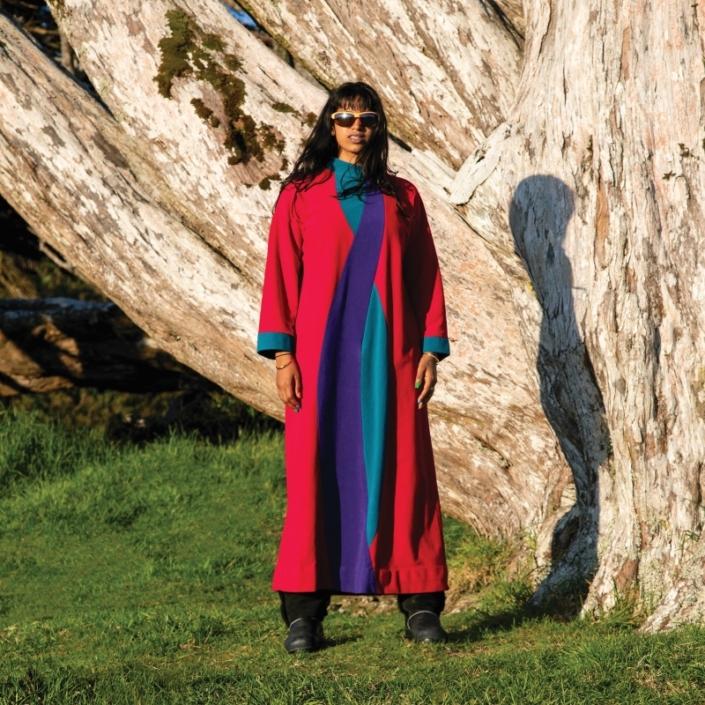 https://artcollector.net.au/wp-content/uploads/2023/04/Vishmi_Helaratne-3-resized.jpg
800
800
Erin Irwin
https://artcollector.net.au/wp-content/uploads/2021/11/Art-Collector-logos-transparency-WHITE-1080x1080px-2.png
Erin Irwin2023-04-11 20:10:262023-04-11 20:25:48Debutantes: Vishmi Helaratne
https://artcollector.net.au/wp-content/uploads/2023/04/Vishmi_Helaratne-3-resized.jpg
800
800
Erin Irwin
https://artcollector.net.au/wp-content/uploads/2021/11/Art-Collector-logos-transparency-WHITE-1080x1080px-2.png
Erin Irwin2023-04-11 20:10:262023-04-11 20:25:48Debutantes: Vishmi Helaratne