STILL: National Still Life Award

Medium / category: All mediums, still life

Eligibility: Australian citizens or permanent residents in Australia

Associated institution: Yarrila Arts and Museum (YAM)

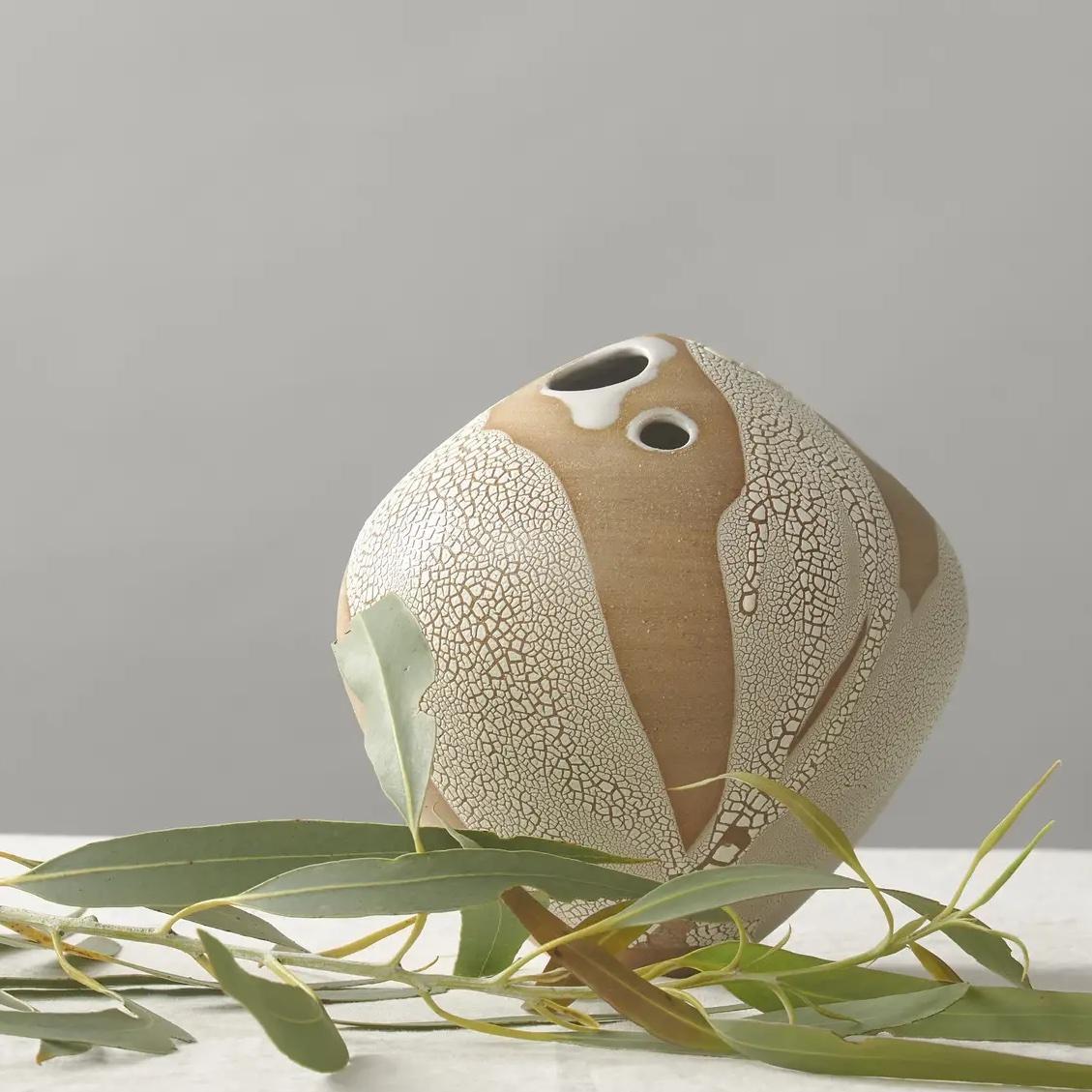
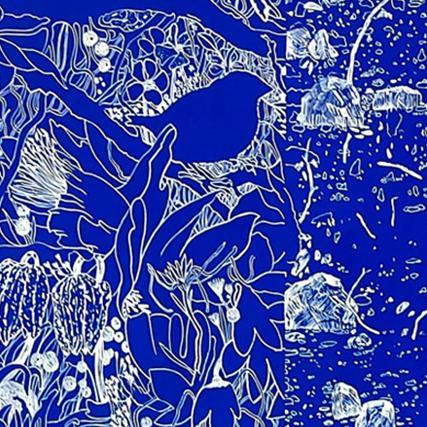
Still is a biennial, acquisitive award for artworks in the genre of still life, in all mediums. The award is open to artists at all stages of their careers. Still invites contemporary explorations of still life themes and highlights the diversity and vitality of still life in Australian contemporary art, broadening the interpretation of this enduring genre. Selected by a panel of judges, the winner receives $30,000.

Notable Previous Winners

2021:

  • Blak Douglas, Silent Cop, 2021

Winner: Still: National Still Life Award

Information up to date from June 14 2023
MORE ART PRIZES

Elyas Alavi wins the inaugural Artbank Award

Over 740 entries. Eight finalists, one from each state and territory. One work acquired into the national collection.

Richard Lewer’s Steve begins a three-year national tour

Renée Estée wins the 2026 MA Art Prize

Australian painter Renée Estée has been named the winner of the 2026 MA Art Prize.

Nathan Beard wins final National Photographic Portrait Prize

After almost two decades celebrating the diversity of Australian photographic portraiture, the National Photographic Portrait Prize enters its final chapter.

Word to your Mother

mothermother collective’s latest collaboration with Sanderson proposes matriarchal futures as a model for exhibition-making in precarious times.

Record field named for 2026 Fisher’s Ghost Art Award

Campbelltown’s long-running prize returns for its 64th year.

Australian Pavilion to anchor Art OMI’s expansion in upstate New York

Collector Francis Greenburger reveals plans for the first national pavilion at Art OMI Pavilions — a permanent Hudson Valley home for contemporary Australian and First Nations art.

Sydney Contemporary names 2026 MA Art Prize finalists

Drawing from a record number of submissions in a year that also sees the fair reach a milestone.

2026 Telstra Art Award as NATSIAA Winners Announced

The $100,000 Telstra Art Award goes to Marri Ngarr artist Ryan Presley, leading a slate of six category winners at the 2026 National Aboriginal and Torres Strait Islander Art Awards in Darwin.

The Generous Eye: Ian Bernadt

Perth physician and philanthropist Ian Bernadt has been collecting art for more than sixty years, from Japanese prints picked up as a child in Cape Town to major works by Australia’s greatest painters. He talks about the ones that got away, the joy of giving, and how the best painting in the show is rarely the most expensive.

Words | Victoria Laurie
Photography | Bianca Woolhouse

Ian Bernadt at home with his collection, including works by Col Jordan.

The elements that make an art collector are often as diverse and unexpected as the art they collect. For Ian Bernadt, it began with a gift.

“When I was a kid, there was a famous artist in Cape Town called Gregoire Boonzaier, and he gave me a Japanese print as a birthday present. It started my interest, and I learned to read the signatures on the Japanese prints. I started collecting them and I used to go on a Saturday morning down to various antique shops which had a lot of Asian oriental art, believe it or not. It was because the trade route to the east, to India and Japan, was via Cape Town.”

Ian Bernadt is one of Western Australia’s most significant private collectors and philanthropists. A retired medical specialist who migrated from South Africa to Perth in 1973, he has spent more than six decades assembling a collection of extraordinary breadth — from Japanese prints to West Australian modernists to Indigenous Australian art. His generosity to the Art Gallery of Western Australia has been transformative; the gallery’s Bernadt space, named in honour of Ian and his late wife Sue Bernadt, stands as a lasting testament to four decades of cultural giving.

Genetic predisposition also played a part in Ian’s collecting habit spanning over sixty years. “My mother was very interested in the arts in South Africa, and I must have inherited that compulsion. She was a great collector, and she had a very good eye.”

Ian’s career in medicine took him to the UK, and then later to Australia “because South Africa was at the height of apartheid, dark, dark days.”

He and his wife Sue migrated on the SS Marconi, arriving in Perth on 19 September 1973. “Coming to Australia under Gough Whitlam was like coming into a sort of renaissance of excitement. It was wonderful — we’d come from a place where books were banned and there was no television.”

He didn’t know anything about Australian artists, especially West Australian artists. “Wim Boissevain was very popular, and Robert Juniper was considered very avant-garde. Everyone laughed at Guy Grey-Smith with his beautiful big paintings of the Pilbara, but his was the first painting I bought in Australia.”

“I started learning about Sidney Nolan, Russell Drysdale, all the great artists with a whole new vision. I purchased some wonderful masterpieces, many of which, unfortunately, I sold. I had a beautiful major Jeffrey Smart. I had a lovely Charles Blackman schoolgirl, a great John Brack. I had the best Brett Whiteley you’ve ever seen. A beautiful bird, which he did by squeezing oil paint from the tube in different colours. Foolishly, I sold it. I mean, what an idiot!”

But his interests soon broadened to artists in the Asia-Pacific region, a passion reflected in arrangements of elaborate carvings, prints and puppets from South East Asia in his art-cluttered home in leafy Swanbourne, Perth.

“We would go to Bali, where I was suddenly exposed to a huge amount of culture from Indonesia. I bought lots of wayang puppets, and I’ve given about 20 to the WA Museum.”

Bernadt met some of his artist heroes, including the doyen of landscape abstraction, Howard Taylor. “I drove down to see him at his home in the forests south of Perth. They prepared a little snack lunch for me and I went to his studio and I was prattling on, God knows what I was saying. He just smoked his pipe, this guy who knew everything about art. I bought about six paintings from him while I was down there. And at that time they were selling for hundreds of dollars. Now they are worth a lot more money, and I sold a major Howard Taylor. But that one up on the wall behind you I’ve kept.” He points to a work consisting of an elegant curved wooden surface on which is painted a perfect circle.

Ian Bernadt in his kitchen.

Ian says his taste is ‘catholic’ – broad and inclusive. He admires Polish-born Australian artist Stan Ostoja-Kotkowski, who was the first kinetic artist to use laser beams in South Australia in the 1960s and ‘70s. Equally, he has collected a Tasmanian naïve-style artist called Owen Lade who produced 170 child portraits between 1975 and 1989. An entire corridor in his house is hung with works by the late Queensland artist Sally Gabori. Two bedrooms are lined with stacked art that can’t be hung; Ian says he’s also got “a warehouse full of art.”

His latest purchase at auction is a Japanese portable shrine. “It came up recently and nobody wanted it. I was at the British Museum a few months ago, and they had a similar shrine but not as nice as this one. And King Charles has got one, but that’s not as nice as mine either!”

Portable Japanese Shrine alongside a painting by Stanislaus Ostoja-Kotkowski.

Ian and his late wife Sue have been notable art donors of hundreds of works, to universities, institutions, public galleries and the Art Gallery of Western Australia in particular. Their forty years of generosity has been rewarded with an AGWA exhibition space being named after the Bernadt couple.

Why does he buy and then give away so many works? “Well, there’s various reasons. To be honest, one incentive is the cultural gift program so it’s a nice way of paying (less) tax. Secondly, it’s nice to share art. I really enjoy that.”

The largest gift to AGWA was a 36-piece work by Rosalie Gascoigne, called Plein Air. How does he feel when he sees his donated paintings on public display? “It gives you a large amount of pleasure, a sense of immortality, because in 100 years’ time, we’ll all be gone.”

What would he recommend to people if they want to start collecting? “Don’t rush into it – although I often ignore my own advice! If you like something, don’t put a sticker on it straight away. Give it 24 hours. And if you’re going to choose an artist, always get the best work if you can, the best painting in the exhibition, which is often not the most expensive one.”

Major works by Howard Taylor feature prominently in Bernadt’s collection.


First published in Art Collector issue #116 (April–June 2026).

Low Kee Hong Named Artistic Director of the 2028 Biennale of Sydney

Current Creative Director of Manchester’s Factory International, will lead the 26th edition of the Biennale, opening in March 2028.

50 Finalists Announced for the 2026 Bowness Photography Prize

The Museum of Australian Photography has revealed the shortlist for the 21st William & Winifred Bowness Photography Prize.

MONA Is Heading to Bangkok

The subversive Tasmanian museum that rewrote the rulebook is crossing the equator.

A new partnership between Art Collector and Hyde Hotels

A new partnership places Art Collector inside Ennismore’s design-led hotels in Naarm/Melbourne and Boorloo/Perth.

Louis Grant joins Sabbia Gallery

Featured in Art Collector’s 2026 Undiscovered feature, the Ngunnawal Country/Canberra artist joins Sabbia Gallery.

MARS to Miami

The Naarm/Melbourne gallery has signed an agreement to launch MARS Miami — a pop-up model bringing Australian artists to audiences across North America.