Sunshine Coast Art Prize
Medium / category: 2D artworks in any medium
Eligibility: Australian citizens or permanent residents in Australia
Associated institution: Caloundra Regional Gallery
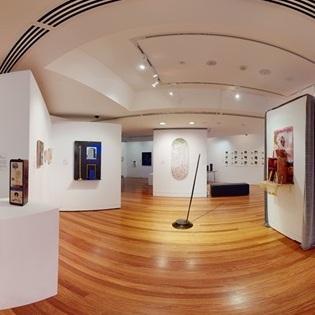
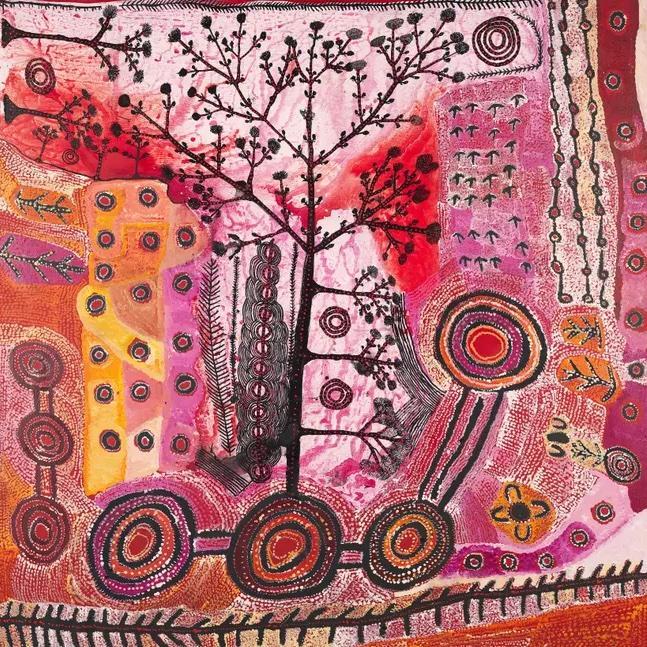
The national acquisitive Sunshine Coast Art Prize is a dynamic visual arts award reflecting outstanding contemporary 2D arts practice in Australia. The exhibition presents the remarkable finalist works by artists from across the country. The winner receives $25,000 and their artwork is acquired into the Sunshine Coast Art Collection.
Notable Previous Winners
2022:
- Kate Tucker, Carve time/ print space, 2022
Winner: Major Prize
The Different Award Categories
The artwork awarded with the Major Prize will be acquired into the Sunshine Coast Art Collection. A People’s Choice prize is also decided by way of public vote by exhibition visitors. In addition a non-acquisitive Highly Commended prize of $5000 and a non-acquisitive People’s Choice prize of $2500 is allocated.
Information up to date from June 14 2023

Winners announced for 2026 Ravenswood Art Prize
Sydney-based artist Monica Rani Rudhar has won the 2026 Ravenswood Australian Women’s Art Prize.
Finalists announced for 2026 Telstra NATSIAA
More than 60 artists have been named finalists in the 2026 Telstra National Aboriginal and Torres Strait Islander Art Awards (Telstra NATSIAA), now in its 43rd year.
Cool Hunter: Emma Buswell
Emma Buswell transforms kitsch cultural moments like the Coles roast chicken bachelor’s handbags into labour-intensive textile works that probe power, mythology, and the absurdities of contemporary Australian life.
Words | Christina Chau
Photography | Bianca Woolhouse
Emma Buswell in her studio. Photo: Bianca Woolhouse.
Emma Buswell is a West Australian-based artist, writer, and curator well known for her large-scale tapestries and knitted works that explore power, culture, and mythology through kitsch and art historical visual tropes. Her work is a humorous endeavour in blending the visual hierarchy between grand narratives and everyday visual culture, while experimenting with scale, form and production.
Buswell’s career has steadily gained traction in the last 15 years leading up to her 2025 Ramsay Art Prize People’s Choice award. She was a resident at Fondazione Antonio Ratti (2011), part of the Australia Council for the Arts Venice Biennale professional development program (2015), was a featured artist in the Indian Ocean Craft Triennial at John Curtin Gallery (2024), has had solo exhibitions across Western Australia and Victoria, and is collected in the State Collection of Western Australia, Artbank, the City of Joondalup and a number of private collections.
Emma Buswell, Between draft and final intentions, 2024. Wool, cotton and acrylic yarn, 165 × 260 × 5 cm. Courtesy: Ava Gallery, Boorloo/Perth.
What is most striking about Buswell’s work is her ability to synthesise cultural events amongst the day-to-day, and highlight their absurdity. For instance, her beaded handbag that mimics a roast chook from Coles, affectionately referred to as the bachelor’s handbag, and her limited edition run of jumpers featuring Mark McGowan’s comment that “There’s nothing unlawful about going for a run and eating a kebab” during a press conference at the height of COVID—these humorous works reflect iconic cultural moments while juxtaposing them with their methods of production. The toil and labour of their making, featuring intricate embroidery and handcraft textiles, encourage viewers to take stock of power and culture in Australia.
Emma Buswell, The Pool, 2024. Wool, cotton and yarn. People’s Choice Award in the 2025 Ramsay Art Prize at the Art Gallery of South Australia. Courtesy: Ava Gallery, Boorloo/Perth.
Buswell’s more recent work is informed by matrilineal handcraft and knitting techniques and she has produced large-scaled knitted tapestries made with her Singer Memo-matic 321—a knitting machine popular in the 1960s associated with domestic hobby craft and textiles. With this tool she’s become more focused on representations of women’s labour and art history and exploring contemporary anxieties around class, politics and echo chambers. Her large-scale work The Pool consists of two tapestries that refer to Narcissus and Echo from Ovid’s Metamorphoses, and Buswell draws connections to contemporary dilemmas around narcissism in politics and the echo chambers that emerge in online media platforms. Buswell is one to watch out for as a millennial keen to synthesise contemporary culture while experimenting with form.
First published in Art Collector issue #115 (January–March 2026).
Collegiality and Confidence
Aotearoa Art Fair returned in 2026 self-assured and energised — and put relationships, not transactions, at its centre.
Richard Lewer wins 2026 Archibald Prize
Naarm/Melbourne-based painter Richard Lewer has been awarded the 2026 Archibald Prize for his life-size portrait of senior Pitjantjatjara artist, Elder and ngangkari (traditional healer) Iluwanti Ken.
David Egan wins 2026 Bayside Painting Prize
David Egan has been awarded the $25,000 non-acquisitive Major Prize at the 2026 Bayside Painting Prize for his work “Decreation Machine.”
Rare Papunya works from a landmark private collection headline D Lan Galleries’ Significant 2026
Ten early Western Desert paintings assembled by architect Carey Lyon and psychologist Jo Crosby go on exhibition this May.
Twelve finalists named for 2026 National Photography Prize
Murray Art Museum Albury reveals the shortlist for its prestigious biennial award, now honouring the gallery’s founding director for the first time.
What does it mean to hold a collection?
For collectors drawn to questions of preservation, stewardship and the cultural life of objects, Smith’s survey at the Arts House Trust offers an unexpectedly personal provocation.
First Nations stories woven into the heart of Perth’s newest campus
Two major public artworks by Lea Taylor and Reko Rennie bring the cultural and ecological narratives of Boorloo to Edith Cowan University’s new city precinct.
Bett Gallery announces representation of Tasmanian painter Clifford How
Hobart’s Bett Gallery has announced the representation of Tasmanian landscape painter Clifford How.
The 2026 NGV Triennial opens in Melbourne this December
The National Gallery of Victoria will open the fourth edition of its flagship contemporary art and design survey this summer.
Sydney stencil artist Luke Cornish wins 2026 Gallipoli Art Prize
Sydney artist Luke Cornish, also known as ELK, has won the 2026 Gallipoli Art Prize.
Remarkable Collectors: Shane Akeroyd
When Shane Akeroyd launched a public digital platform showcasing moving-image art from his collection, he offered a new model for how private patronage can serve public access.
Words | Robert Buratti
Candice Breitz, Profile, 2017. Courtesy: the artist and the Akeroyd Collection.
In an art world where major collections often remain hidden behind closed doors, Shane Akeroyd has taken a radically different approach. In 2023, the Hong Kong-based tech financier launched the Akeroyd Collection, a digital platform showcasing over 200 moving-image works from his extensive holdings—representing roughly 15 percent of his 1,500-piece collection. The initiative represents a fundamental reimagining of what private collecting can mean in the digital age.
“Having work in storage is an unfortunate reality, although something that often does neither the work nor artists any good,” Akeroyd explains. “My moving image collection is all about making work available to those who might not ordinarily have access.”
Candice Breitz, Profile, 2017. Courtesy: the artist and the Akeroyd Collection.
The collection traces an ambitious arc through contemporary moving-image art, from early pioneers like Joan Jonas and Charles Atlas to cutting-edge practitioners working with NFTs and virtual reality. Derek Jarman’s baroque 1971 fantasy Electric Fairy—once thought lost—sets the tone, alongside works by Jeremy Deller, Duncan Campbell, Jordan Wolfson, and Sin Wai Kin. Other significant artists represented include Ed Atkins, Helen Marten, Alex da Corte, Peter Fischli & David Weiss, Sonia Boyce and Auckland-born, Australian-based artist Luke Willis Thompson.
What distinguishes Akeroyd’s approach is not just the breadth of the collection, but his commitment to supporting artists pioneering new technology. Among his earliest acquisitions was Adam Chodzko’s subversive 1996 piece Flasher, in which the artist inserted footage of red distress flares into Blockbuster rental videos before returning them. That spirit of disruption continues through contemporary works by Martine Syms, Tony Cokes, Sondra Perry, P. Staff, and Mark Leckey.
Installation view, Luke Willis Thompson, Autoportrait, 2017. Courtesy: the artist and the Akeroyd Collection.
The platform operates as a virtual museum, with curated exhibitions changing every two to three months. Guest curators and writers select works and contribute critical essays, building what Akeroyd describes as “a history and a body of critical writing” around moving-image art. The collection also actively lends works to institutions—including a video by Yee I-Lann shown at Singapore’s ArtScience Museum—making these often difficult-to-display artworks accessible to schools, colleges, and audiences who wouldn’t normally encounter them. His holdings include works on VHS, reel-to-reel, CD, and countless USB sticks, requiring constant vigilance against technological obsolescence and data corruption.
Beyond the online platform, Akeroyd’s philanthropic reach extends across the contemporary art ecosystem. He sits on boards at M+ and Para Site in Hong Kong, Artists Space in New York, and Chisenhale Gallery in London. His recent five-year gift to Tate supports acquisitions for its British Collection, while his ten-year sponsorship of the associate curator role at Venice Biennale’s British Pavilion demonstrates long-term commitment to institutional support.
(Still image) Adam Chodzko, Flasher, 1996. Courtesy: the artist and the Akeroyd Collection.
For Akeroyd, who describes himself as coming from a working-class background in Kent without formal art training, collecting has always been about intellectual engagement and personal connection with artists. As museums face increasing constraints on storage and conservation budgets, Akeroyd’s model offers an alternative vision—one where private collectors take active responsibility for making art publicly accessible while supporting the infrastructure needed to preserve it for future generations.
First published in Art Collector issue #115 (January–March 2026).
Agenda Setters: Nina Fitzgerald
With her dynamic Laundry Gallery in Garramilla/Darwin, Nina Fitzgerald is reshaping how collectors discover and engage with First Nations art—bridging remote art centres with new audiences through a welcoming, contemporary space that’s earning international recognition.
Words | Faraday Boydell
Nina Fitzgerald at the site previously known aas Parap Launderette, now Laundry Gallery, Garramilla/Darwin. Courtesy: Laundry Gallery, Garramilla/Darwin.
It is without a doubt that Nina Fitzgerald is playing a decisive role in reimagining Garramilla/Darwin’s cultural identity, positioning the city as an essential destination for connoisseurs of world-class cultural experiences and collectors of internationally celebrated contemporary art.
An Aboriginal and Torres Strait Islander woman with family connections to the Limilngan-Wulna people of the NT, the Mualgal in the Torres Strait, and the Wuthati of the Cape York Peninsula, Fitzgerald is more than just a gallerist. She operates a suite of ventures that blend culture with commerce in ways that support (rather than compete with) her prolific, national network of First Nations artists and creative businesses, and which aim to amplify the impact of the work being done by artists at remote art centres.
Opened in 2022, her most notable project is the dynamic Laundry Gallery, a multidisciplinary creative hub that reimagines how First Nations art is experienced and accessed. Housed inside the iconic old Parap Laundromat, the gallery’s monthly exhibition roster spotlights the work of exceptional artists and resituates age-old stories in the context of the contemporary world.
For emerging collectors of art, Laundry Gallery has become a vital point of entry: an accessible, contemporary hub that bridges the distance between First Nations artists and remote art centres, and the audiences eager to engage with them.
Interior image,Laundry Gallery, Garramilla/Darwin. Courtesy: Laundry Gallery, Garramilla/Darwin.
Artworks are presented in ways that blend a fresh, contemporary curatorial approach with artist-led, culturally grounded storytelling; and the distinctive cool power of the space gives the gallery a welcoming presence that attracts younger buyers and those who might not be comfortable in a white-cube setting. This is where Laundry stands out from its peers: a new generation of visitors are warmly invited into meaningful contact with artworks and stories that might otherwise feel geographically or conceptually out of reach.
As a values-driven gallery, Laundry recognises that its role is to deepen visibility and create new forms of engagement without disrupting the integrity of existing community-led cultural enterprises. The laundromat origin story, at once a nostalgic nod to Garramilla’s past and a metaphor for spinning new stories, captures the ethos shared by Fitzgerald and her business partner, Laura Shellie. By blending old and new, Laundry positions itself not in competition with remote art centres (who often manage the sale of work by their artists in-house), but as a platform that elevates and strengthens what is already there.
What is clear is that Laundry Gallery breathes fresh air into the Garramilla cultural scene, offering a dynamic, future-focused program that offers an exciting, new take on traditional stories and established practice. Its recent inclusion on Condé Nast’s 2026 must-visit list underscores its rapidly growing cultural relevance, and signals Nina Fitzgerald’s rising influence as a key figure shaping how collectors engage with First Nations art.
Front entrance of Laundry Gallery, Garramilla/Darwin. Courtesy: Laundry Gallery, Garramilla/Darwin.
First published in Art Collector issue #115 (January–March 2026).
Australian Galleries Make Their Mark at Art Paris 2026
Two Sydney galleries brought distinctly different visions of contemporary Australian practice to the Grand Palais this week, as Art Paris drew to a close on 12 April.